The manual input problem
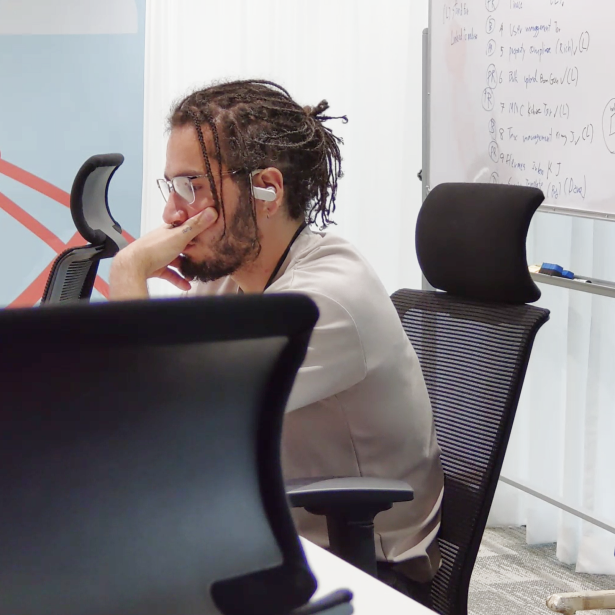
The PARA method (Projects, Areas, Resources, Archive) looks great on paper. In practice it quietly turns into a second job. You spend more time sorting, tagging, and filing than you ever spend using what you saved.
It becomes a little game, and a trap. Organizing feels like progress, so you keep doing it instead of moving forward. Then comes the weekly ritual: the data-hygiene session where you clean the inbox, file the loose notes, and tidy the database before you let yourself start real work. Everything sits behind that chore.
Here is the cruel part. The more stress you are under, the less you keep up with it. But that is exactly when you need it most. So the moment you finally reach for your second brain, it is a mess, out of date, useless. Instead of helping you move, it just sits there as one more thing you are behind on, a place to ruminate rather than a place to think.
A tool that only works when your life is already calm is not a second brain. It is a chore.
A real second brain does the work itself
The fix is not a better template or more discipline. It is to stop doing the work by hand.
A real second brain captures and organizes on its own, in the background, and hands you reports instead of homework. You stop filing and start delegating. You tell it what you need in plain language, out loud, and it does the busy work: pulling the relevant notes, summarizing your week, surfacing the one thing you forgot. The goal is not to store more. It is to never touch the organizing again.
That is the whole difference between a database you maintain and an agent that works for you.
The stack I would actually use
You do not need one magic app. You need two layers.
At your desk, a desktop agent that can take control of the machine and do the local busy work faster than you would by hand. Claude Code is what I use for this: it sits on your real computer and handles the grind, the files, the repetitive tasks, the things you would otherwise click through one by one.
And you are not chained to the desk for it. You can dispatch jobs to Claude Code from your phone. Leave the computer on, go for a run, and hand it busy work from anywhere: take over a spreadsheet, copy data from one app into another, push through a software task you would normally do click by click. Just keep in mind this is for the busy work, and it needs your real computer awake and open, because it is your machine doing the job.
On the move, a messaging-native agent like OpenClaw or Hermes, so you can capture and command from your phone with your voice. You are walking, a thought lands, you say it out loud, and it goes where it belongs. No app to open, no typing, no Notion. This is also the layer that never sleeps: unlike Claude Code, an agent like this runs remotely and stays on whether or not your laptop is awake, an extra computer that simply never shuts off.
Together they cover both halves of your day: deep local work at the desk, quick voice capture everywhere else. So stop writing things into Notion and hoping you will organize them later. Talk to your second brain and let it fill and run itself.
| Where | Tool | What you delegate to it |
|---|---|---|
| Your computer, drive it from your phone | Claude Code | The local grind: organizing files, driving a spreadsheet, copy-pasting between apps, repetitive software tasks. Needs your computer on |
| Always on and remote | OpenClaw or Hermes | Voice capture and quick commands from anywhere, running in the background even when your computer is off |
| The model behind both | Claude or another LLM | The actual thinking: summarizing, tagging, and connecting what you feed in |
This is exactly what Content Brain sets up: a second brain that fills itself, with no manual input. Book a free Gap Assessment if you would rather think than organize.